What Would Alan Greenspan Think of Today's Stock Market?
Analysts invoke Greenspan's 'irrational exuberance' framework to assess whether today's equity markets are overheated.

Alan Greenspan's famous 1996 warning about "irrational exuberance" in financial markets remains one of the most cited phrases in Wall Street history, and investors today are once again asking whether his cautionary framework applies to a stock market trading near record highs amid persistent economic uncertainty.
Greenspan coined the term during a period when equity valuations appeared stretched relative to underlying economic fundamentals — a concern that proved prescient when the dot-com bubble eventually burst years later. The parallels to today's environment, marked by elevated price-to-earnings ratios and surging enthusiasm around artificial intelligence stocks, have prompted renewed debate about whether current market optimism is grounded in reality or driven by speculative momentum.
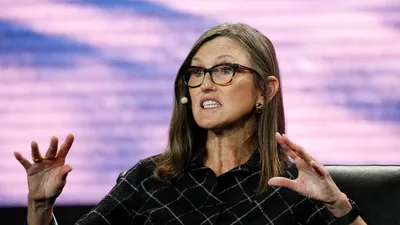
Read more Cathie Wood Makes $28.1M Bet on Major Tech Stock →
Market analysts have long used Greenspan's lens as a benchmark for gauging sentiment versus substance. When asset prices climb faster than corporate earnings or GDP growth can justify, the former Fed chairman's ghost tends to resurface in financial commentary — serving as a rhetorical check on euphoria that data alone sometimes fails to temper.
The question carries real weight for everyday investors deciding whether to stay fully invested, rotate into defensive assets, or trim equity exposure. While no single indicator can confirm whether a market has crossed from confidence into exuberance, the combination of high valuations, momentum-driven rallies, and retail investor participation historically signals elevated risk — precisely the conditions Greenspan sought to flag decades ago.
Continue reading at Yahoo Finance.