Chip Index Doubles in 2024 Even as Nvidia Finishes Last
A major semiconductor index has doubled this year, but Nvidia — its biggest name — ranks dead last among its peers.
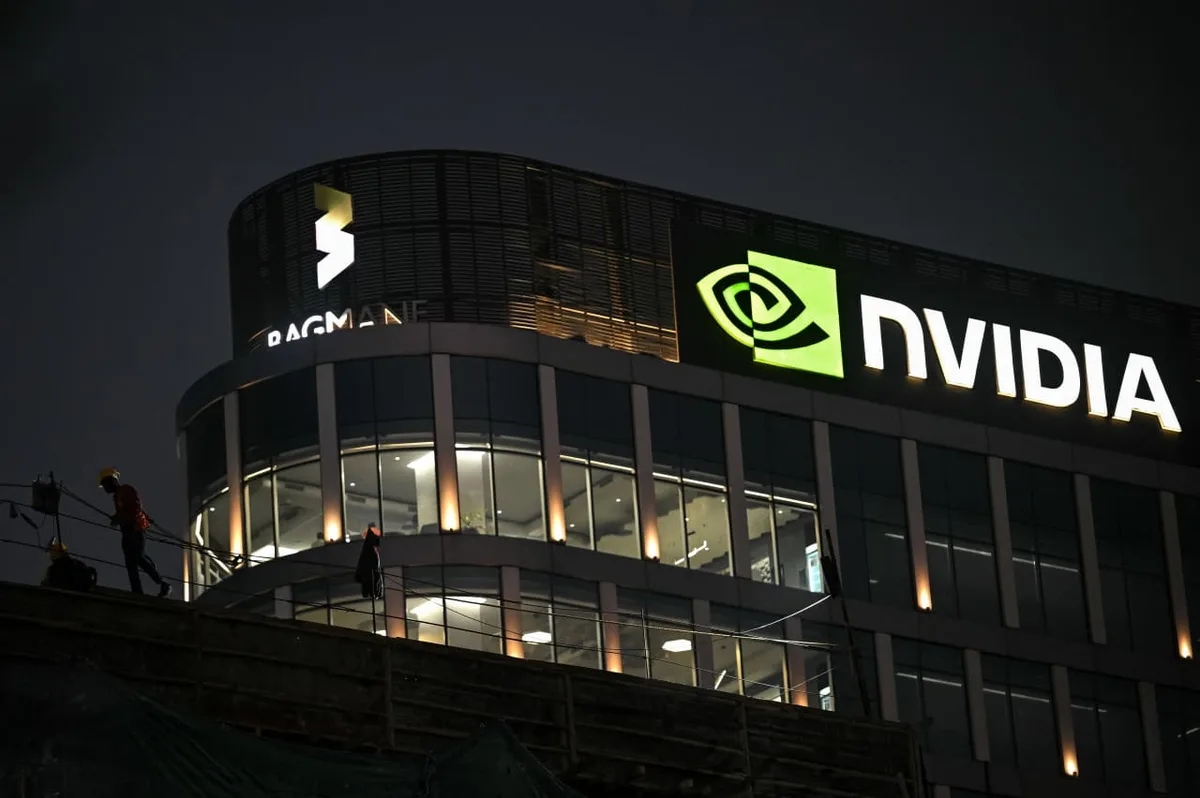
A leading chip sector index has surged roughly 100% in 2024, a remarkable milestone that came despite Nvidia landing at the bottom of the index's performance rankings, according to a MarketWatch report. The paradox underscores how the broader semiconductor industry has quietly powered ahead while the market's most celebrated AI chipmaker struggles to keep pace on a relative basis.
Nvidia's struggles to top expectations stem largely from its own success. As the company has ballooned into one of the largest corporations on earth by market capitalization, the bar for beating Wall Street forecasts has risen dramatically. "Nvidia has gotten so large that its ability to beat expectations has gotten much smaller," one analyst noted, capturing the core tension between the company's towering valuation and the finite room left for positive surprises.
Read more Dow Rises as Bessent Acts on Iran; AI Stocks Eye Buy Points →
The dynamic illustrates a well-known Wall Street phenomenon: hypergrowth companies eventually face a law-of-large-numbers problem. When a stock has already priced in extraordinary performance, even strong earnings can fail to move the needle — or worse, disappoint investors conditioned to expect the extraordinary. For Nvidia, which became synonymous with the artificial intelligence investment boom, that ceiling appears to have arrived sooner than many anticipated.
Meanwhile, the rest of the chip sector has benefited from a broadening of investor interest beyond AI accelerators, with companies across memory, equipment, and logic chips all participating in the rally. That broad-based strength allowed the index to double even as its most prominent constituent lagged. The divergence raises fresh questions about whether Nvidia can reclaim its leadership role within the sector or whether the AI trade has matured enough to reward a wider range of chipmakers going forward.
Continue reading at MarketWatch.com