Asia Markets Reel as AI Selloff, Middle East Strikes Hit Sentiment
Asian equities tumbled Thursday as an AI rally unwound and U.S.-Iran strikes rattled oil markets and regional currencies.
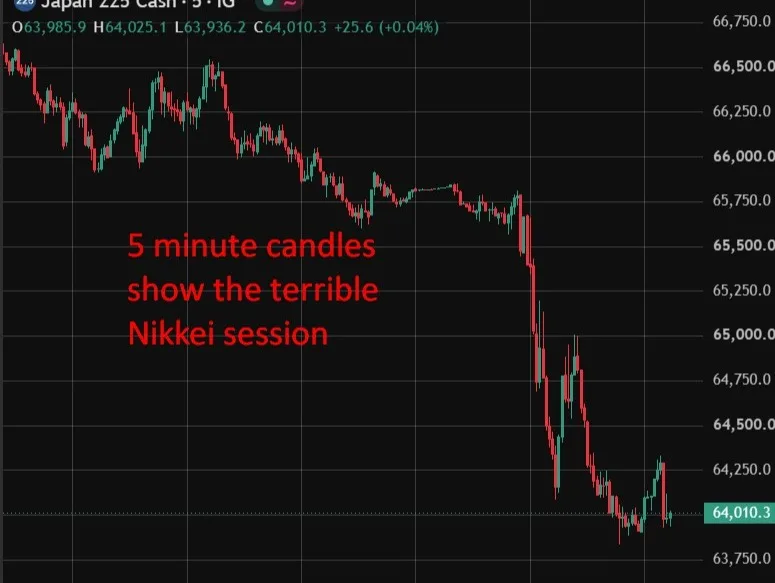
Asian markets closed a turbulent session Friday, July 17, with the Nikkei plunging as much as 4.25% and Nasdaq futures falling 1% as investors dumped technology stocks following a rapid unwinding of the recent artificial intelligence-driven rally. The broad selloff swept across equities, currencies, and commodities, leaving traders scrambling to reassess risk across the Asia-Pacific region.
Escalating military activity in the Middle East added a significant layer of pressure. U.S. strikes on Iranian infrastructure entered a sixth consecutive day, with attacks reportedly widening to targets in Jordan, Bahrain, and Kuwait, while unconfirmed reports emerged that Iran had targeted the King Fahd Causeway linking Bahrain to Saudi Arabia. Oil prices held firm through the turmoil and were on track for their biggest weekly gain since April, reflecting how deeply supply fears had taken root in the market.
Read more S&P 500's Most-Traded Stocks in Friday's Session →
Currency markets were equally unsettled. India's rupee edged toward a record low, prompting the Reserve Bank of India to intervene, though persistent oil price pressure and broader risk aversion limited the central bank's effectiveness. Meanwhile, China's State Administration of Foreign Exchange sought to reassure markets, declaring its foreign exchange market stable and resilient despite what it called a complex global backdrop. The People's Bank of China set its USD/CNY reference rate at 6.7934, modestly above analyst estimates.
On the geopolitical front, former President Donald Trump's renewed claims blaming China for a 2020 election breach threatened to complicate a fragile trade truce ahead of a scheduled meeting between Trump and Chinese President Xi Jinping, adding another uncertainty for investors already navigating a crowded risk landscape. Federal Reserve Vice Chair Jefferson offered measured reassurance, saying policy is well positioned, but he left the door open to further rate hikes if inflation proves sticky — a caveat markets took seriously given the day's volatility.
In a notable shift in long-term sentiment, a prominent decades-long bond market bull publicly reversed course, citing structural deficits, persistent inflation, and AI-driven borrowing as reasons for an historic bearish pivot. Separately, Bernstein raised its 2026 gold price target to $4,533, pointing to sustained central bank buying and expectations of muted Fed rate hikes as key drivers. Continue reading at Forexlive.